TRUST: The Underrated Competitive Moat That No One Talks About

For most of modern history, authority in organisations was built on a simple equation: those who knew most, led most.
Information was the scarce resource. Access to data, to expertise, to the right networks. These were the foundations of influence. You rose in an organisation partly on the basis of what you knew that others didn't. You built credibility as a leader by being the most informed person in the room.
AI has fundamentally disrupted that equation. And most leaders have not yet reckoned with what that means.
When Information Becomes Abundant, Interpretation Becomes the Asset
AI can now surface patterns, synthesise data, generate analysis, and produce strategic recommendations at a speed and scale that no human team can match. The information advantage is gone. Or more precisely, it has been democratised. Any organisation with access to capable AI tools has access to roughly the same information landscape as its competitors.
In that environment, the question is no longer: who has the best data?
It is: whose interpretation of that data do people trust?
This is a profound shift. And it has implications not just for how leaders communicate, but for what authority actually means in the age of AI.
The Trust Moat
The concept of a competitive moat — the durable advantage that protects a business from competition — has typically been understood in terms of scale, technology, or network effects. Those still matter. But I want to argue that trust is becoming one of the most powerful and underappreciated competitive moats available to leaders and organisations right now.
Here is why: in a world where AI can generate a credible analysis of almost anything, the differentiator is not the analysis. It is whether the person presenting it has earned the right to be believed. Whether their judgment has proven reliable over time. Whether they are known to tell the truth even when it's inconvenient. Whether the people around them trust their read of a situation enough to act on it.
Trust, built this way, is extraordinarily hard to replicate. It is accumulated through consistent behaviour over time. It cannot be manufactured by a tool or outsourced to a platform. And once established, it creates a form of authority that is genuinely defensible. It is based not on information access but on something much harder to commoditise: the quality of human judgment, and the relationships that allow that judgment to be heard.
What I Have Seen in Leadership Teams Across Asia
The leaders I coach who are navigating this transition most effectively share a common quality: they have shifted their understanding of what they are for.
They have moved from "I am the person who has the answers" to "I am the person whose interpretation people trust." That is not a small shift. It requires a different relationship with expertise, with certainty, and with the vulnerability of being wrong.
It means investing, deliberately and visibly, in the things that build trust: consistency between what you say and what you do. Honesty about what you don't know. Genuine investment in the development of the people around you. The willingness to change your mind when the evidence warrants it, and to say so openly.
These behaviours build what I think of as "topic trust" — the credibility that comes not just from knowing things, but from being known as someone who interprets things reliably, with integrity, and in the genuine service of the people and organisation you are leading.
In a world where anyone can produce a compelling-looking analysis with AI, this kind of trust is the rarest and most valuable thing a leader can possess.
The Implications for How You Lead
If authority is shifting from information access to interpretation trust, several things follow.
Your communication matters more, not less. How you make sense of a complex situation — the framework you bring, the questions you ask, the context you provide — becomes the core of your value. Invest in it deliberately.
Your track record of judgment is your brand. People will trust your interpretation of AI-generated information to the extent that they trust the quality and honesty of your thinking over time. Every decision you make, every prediction you own, every moment you admit uncertainty rather than confabulate confidence — these accumulate into a reputation that is either an asset or a liability.
Psychological safety is a prerequisite for trust-building. If the people around you do not feel safe to challenge your interpretation, you will never know when your thinking is off. And eventually, your credibility will pay the price. Building environments where honest dissent is welcome is not just a cultural nicety. It is how you protect the quality of your own judgment.
Consistency is irreplaceable. Trust is not built in moments of inspiration. It is built through the relentless, often unglamorous accumulation of doing what you said you would do, showing up the way you said you would show up, and being honest in the moments when honesty is difficult. AI cannot do this for you. It is the most distinctly human form of competitive advantage left.
The Leaders Who Will Define the Next Decade
The leaders who will define what high performance looks like in the next decade are not the ones who use AI the most. They are the ones who have built the kind of trust that makes their interpretation of AI's outputs worth listening to.
They will be the leaders whose teams bring them the unpolished truth, because they have created environments where honesty is safe. Whose boards and clients value their read of a situation, because their track record of judgment has earned that credibility. Whose organisations can move with genuine speed, because trust has removed the friction that normally slows decisions.
AI owns information. But in the organisations that are genuinely thriving, the leader with the trust moat is still the one whose voice carries the most weight in the room.
That will not change. If anything, as information becomes more abundant, it will matter more.
If you want to build the kind of trust that creates real competitive advantage in your organisation, I'd love to have that conversation. Book a complimentary strategy call here.
Adeline Tiah is an ICF PCC Certified Executive Coach based in Asia, with 28 years of corporate leadership experience across global MNCs. She specialises in leadership transformation, high-performing teams, and culture change — and is the author of Reinvent 4.0, a guide to leading with purpose in an age of disruption.
Keep exploring
More insights on AI & LeadershipRelated reading
- Is anyone still finding you on Google?
Not long ago, we typed a few words into Google and scrolled. Today many of us just ask ChatGPT, Gemini or Perplexity and get one answer back. If AI tools don't know you exist, they can't recommend you. Here's what SEO, AEO and GEO mean, and why the foundations still matter.
- Reinventing for Human Advantage
Everyone is reinventing for AI advantage right now. New tools, new workflows, new prompts. Almost nobody is reinventing for human advantage. But as AI takes over more of the technical work, what's left is what machines are worst at. Here's what that actually involves.
- AI Is a Leadership Opportunity. Here Are 5 Ways to Harness It.
Most leaders are treating AI as a threat to manage. A productivity tool to deploy. A cost to optimise. They are missing the bigger frame. AI is a leadership opportunity. The question is not what AI can do for your business. The question is what AI forces you to become as a leader.
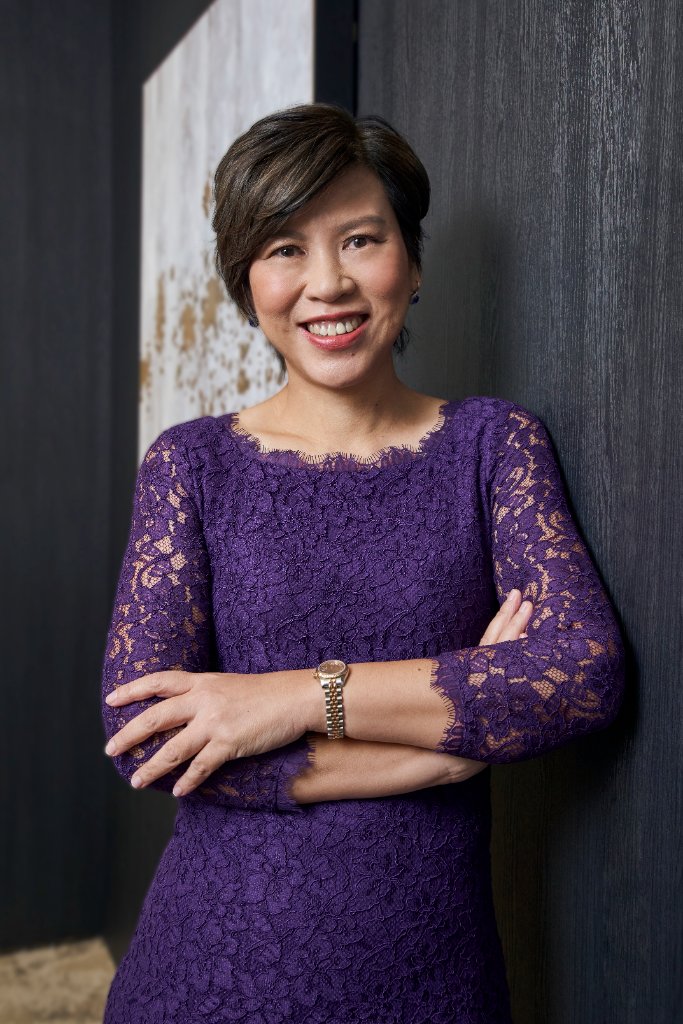
Adeline Tiah
Leadership & Team Coach | ICF PCC | Author of Reinvent 4.0