The New World of Work Is Anxious, Distracted, and Uncertain. Trust Is Your Best Competitive Advantage.

Your best people are worried. And they probably haven't told you.
I know this, because for 28 years I was in the room. I've sat at the leadership table across global MNCs, led through the 2008 financial crisis, the disruptions of digitalisation, and most recently the seismic shift that AI is bringing to every industry I've ever worked in. I've been the corporate warrior — and I've also been the person quietly doing the arithmetic in my head during a town hall, wondering what the next wave of "transformation" would mean for me and my team.
So when I say your best people are worried — I mean it. Not as a consultant's observation. As someone who has lived it from both sides of the table.
Uncertainty doesn't just create anxiety. It creates distraction. Cognitive load. Disengagement. The mental bandwidth your team needs to innovate, collaborate, and execute — is quietly being consumed by worry.
And here's what most leaders miss: this isn't a wellness problem. It's a performance problem. And it has a strategic solution: trust.
The New World of Work: What We're Actually Dealing With
In nearly three decades in corporate life, I have never seen disruption move this fast or land this broadly.
AI is not coming — it's here. Generative tools are reshaping creative work, analytical work, even managerial work. Industries that felt stable eighteen months ago are now in flux. Roles are being redefined. Hierarchies are flattening. The skills that made someone valuable three years ago may not be the skills that matter in three more.
I've watched brilliant, high-performing people — people who had given fifteen, twenty years to an organisation — suddenly feel redundant. Not because their work wasn't good. But because the goalposts moved faster than anyone anticipated, and nobody thought to bring them along for the journey.
The result is a workforce that is capable but cautious. Talented but anxious. Present in body, but not always in mind.
Research from Microsoft's Work Trend Index shows that over 68% of employees say they don't have enough uninterrupted focus time at work. Gallup's State of the Global Workplace Report found that only 23% of employees worldwide are actively engaged. The rest are either checked out — or actively disengaged.
This is the real cost of uncertainty. Not dramatic departures or visible breakdowns — but the quiet, persistent drain on your organisation's collective intelligence and energy.
Why Anxiety Kills Performance
I've watched this happen in real time — in strategy meetings where the most important concerns never got raised, in performance reviews where a team member was clearly struggling but said everything was fine, in exit interviews where I finally heard what people had been holding for years.
When the brain perceives threat — and uncertainty triggers the same neurological response as physical danger — it shifts into survival mode. The prefrontal cortex, responsible for complex thinking, creativity, and long-term planning, goes offline. The amygdala takes over.
In practical terms: your people become reactive instead of proactive. Risk-averse instead of innovative. Protective instead of collaborative.
They start optimising for safety rather than performance. They say yes when they mean no. They withhold ideas that feel risky. They wait for instructions rather than taking initiative.
You don't see this in a P&L. You see it in slowing decision cycles, missed opportunities, and a team that's technically functioning but not truly thriving.
And the cruel irony — one I witnessed many times, and I'll admit, fell into myself early in my career — is that the more uncertain the environment, the more leaders double down on control. More oversight, more process, more directives. Which further erodes the one thing that could actually solve the problem: trust.
Trust Is Not Soft. It's Strategic.
When I finally made the shift from corporate leader to executive coach, one of the things I wanted to untangle was why some leaders kept their teams intact and performing through turbulence — while others haemorrhaged talent and momentum the moment things got hard.
The answer, almost without exception, was trust.
Not charm. Not charisma. Not even competence alone. Trust — the deep, earned belief that a leader has your back, tells you the truth, and is genuinely invested in your success.
The data backs this up:
- Companies with high-trust cultures outperform the stock market by 3x, according to Great Place to Work.
- Employees in high-trust organisations report 74% less stress, 50% higher productivity, and 40% less burnout (Harvard Business Review, Paul Zak).
- Teams with high interpersonal trust are 2.5x more likely to be high performing (Catalyst research).
- In a study by Edelman, 63% of employees said they needed to trust their employer before they would fully commit to their work.
Trust is the operating system under everything else. Culture, collaboration, innovation, change adoption — none of it runs well without it.
In the new world of work, where certainty is scarce and the pace of change is relentless, trust is what allows teams to stay anchored, focused, and forward-moving — even when the external environment is turbulent.
What Trust Actually Looks Like in Practice
Trust between a leader and a team is built on three pillars: competence, integrity, and benevolence.
People trust leaders who they believe can navigate the challenge ahead (competence), who say what they mean and mean what they say (integrity), and who they believe genuinely have their interests at heart — not just the organisation's (benevolence).
In uncertain times, all three are under strain. And having been on both sides — as the leader being watched and as the person doing the watching — I can tell you that people notice everything. The corporate-speak in the all-hands. The delayed response to a direct question. The restructuring announcement that came as a complete surprise. Every one of those moments is a withdrawal from the trust account.
The good news is that deposits are possible too. And they don't always require grand gestures.
Five Ways to Build Trust When Everything Feels Uncertain
- Name the uncertainty — don't manage around it. The most trust-building thing a leader can say is: "I don't have all the answers, and here's what I do know." I learned this the hard way. The times I tried to project confidence I didn't have, my team sensed it immediately. Honesty about what's unknown is far more credible than false confidence.
- Create predictability in small things. When the big picture is unstable, consistency in how you show up — your communication rhythm, your responsiveness, your follow-through on small commitments — becomes disproportionately important. Your team is reading you constantly. Show up reliably in the small things.
- Make space for the conversation about AI. Your team is already having it privately. Bring it into the open. Acknowledge the anxiety. Talk about what's changing and what your commitments are around development and reskilling. Silence on this topic is its own kind of statement — and not the one you want to make.
- Separate the person from the performance environment. Often what looks like disengagement is actually distraction born of anxiety. Before you manage the performance, check in on the person. A simple "How are you actually doing?" — and meaning it — can shift the dynamic entirely. I've seen it change the trajectory of a person's entire tenure.
- Invest visibly in your people's growth. Nothing signals benevolence more clearly than a leader who actively invests in their team's development — especially in a world where skills are evolving rapidly. This is not just an HR function. It's a trust signal from leadership.
The Leader's Role in an Anxious World
After 28 years navigating the corporate world — and the last several years coaching the leaders who are navigating it now — I am more convinced than ever that the future of work will belong to leaders who understand that performance follows psychological state.
You cannot optimise your way to a high-performing team. You cannot KPI your way there. Not in an environment where your people are carrying this much ambient stress and uncertainty.
The leaders who will win — who will attract talent, retain it, and unlock its full potential — are those who create the conditions in which people feel safe enough to be honest, trusted enough to take risks, and valued enough to stay.
That is the new leadership imperative. Not command and control in the face of chaos — but trust and clarity as the antidote to anxiety.
In a world where everything is uncertain, the leaders who build trust will be the ones whose teams can still focus. Still innovate. Still deliver.
And that is a competitive advantage that no AI can replicate.
Adeline Tiah is an ICF PCC Certified Executive Coach based in Asia, with 28 years of corporate leadership experience across global MNCs. She specialises in leadership transformation, high-performing teams, and culture change — and is the author of Reinvent 4.0, a guide to leading with purpose in an age of disruption.
Keep exploring
Psychological Safety for Leaders & TeamsRelated reading
- The Best Performer You Almost Fired Was the Quiet One
"Confidence and competence are not the same thing. Here is why your best people are being overlooked." My boss once told me to fire my best performer. Her reason was simple. She is too quiet. That is affinity bias in action, and it is quietly costing organisations their best people.
- How to Talk to Your Team About AI Without Triggering Panic
Her sharpest team member leaned into AI harder than anyone. Then she walked in and asked: 'If the tools can do this much, what do you still need me for?' That question is in your organisation right now. You just haven't heard it yet.
- You Think Your Team Trusts You. Here's How to Find Out If They Actually Do.
The gap between a leader's perception of trust and their team's lived experience of it is one of the most consistent blind spots in organisational life. Here's how to find out where you actually stand.
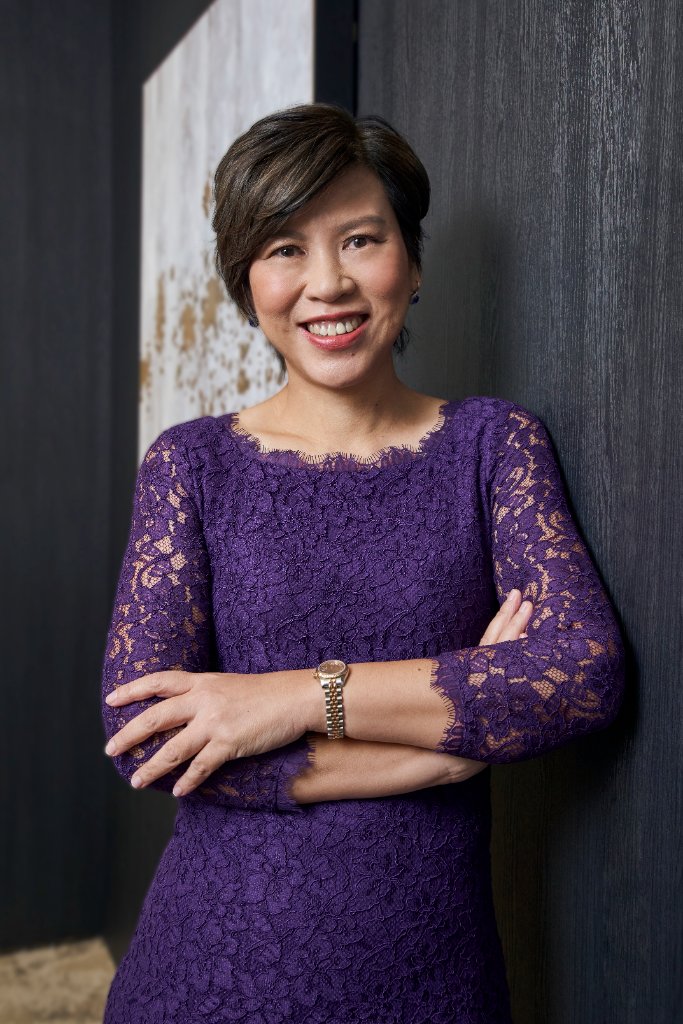
Adeline Tiah
Leadership & Team Coach | ICF PCC | Author of Reinvent 4.0