What Skills Will Executives Need by 2030?

"The skills that got you here are not the skills that will keep you here. The faster you can name the ones that will, the better your next decade gets."
Every few months, a new report circulates predicting the skills leaders will need in five years. The lists are always long. Always different. Always confidently assembled by people who have not had to sit in a corner office and make a decision with incomplete information on a Tuesday afternoon.
I read them because part of my job is to. I discard most of them because the pattern is obvious once you look for it. The lists keep changing the technical skills. They keep listing the same human ones. And they never explain why the human ones keep showing up.
Let me fix that.
Why Technical AI Literacy Has a Short Shelf Life
I coached a COO last year who was deeply proud of her AI fluency. She had taken three courses. She could talk about large language models with reasonable competence. She had even built a few internal workflows herself. She told me, with genuine confidence, that she felt ahead of the curve.
She was. For about eight months.
Then the tools changed. The workflows she built were obsolete within a year. The courses she took were outdated within six months. The vocabulary she had carefully learned was already shifting. She came to our next session frustrated. "I spent all that time getting ahead. Now I feel like I'm starting over."
I told her she was missing the point. She had not wasted her time. She had simply invested it in the wrong layer. Technical AI literacy is not a durable skill. It is a current skill. It matters. It will keep mattering. But it has a shelf life of roughly twelve to eighteen months before the specifics change underneath you. If your strategy is to stay ahead on the tools, you will spend the rest of your career running on a treadmill that keeps getting faster.
The leaders who look future-proof are not the ones who know the most about the current tools. They are the ones who have invested in the capabilities underneath the tools, the ones that do not expire.
The Four Durable Skills
These are the skills I see separating leaders who adapt from leaders who get left behind. They are not new. They are not trendy. They are the ones AI cannot replicate, and they will matter more, not less, as the technical layer gets commoditised.
1. Judgment under uncertainty.
This is the ability to make a good decision when you do not have enough information, when the information you have is contradictory, and when the cost of waiting for more clarity is higher than the cost of being wrong. AI is excellent when the problem is well-defined. It is useless when the problem is not. And most executive decisions are not well-defined. They are messy, value-laden, and context-dependent. The leader who can sit in that discomfort, weigh the trade-offs, and make a call that is directionally right is worth more than any model.
2. Building trust quickly.
Not over months. Not over years. Quickly. In a world where teams are more distributed, more fluid, and more anxious, the leader who can walk into a room, real or virtual, and create the conditions where people are willing to be honest within the first conversation, has a structural advantage. Trust is the substrate on which everything else operates. Without it, your strategy does not execute. Your feedback does not land. Your change does not stick. AI can simulate warmth. It cannot create the safety that makes a human being decide to take a risk in front of you.
3. Clear communication when the right answer is not obvious.
This is not presentation skills. It is not executive presence. It is the ability to stand in front of your team when the situation is genuinely ambiguous, when you do not have all the answers, and communicate in a way that is honest, directional, and stabilising. Most leaders are trained to communicate certainty. The skill that matters now is communicating credible honesty. Saying "I do not know yet, but here is how we are thinking about it, and here is what I need from you." That kind of communication does not come from a template. It comes from a leader who has done the internal work of knowing what they actually believe.
4. Adaptive learning speed.
Not learning a specific tool. Learning how to learn. The half-life of knowledge in your industry is shrinking. The specific things you mastered five years ago are depreciating. What does not depreciate is the capacity to absorb new information, restructure your mental models, and act on what you have learned before it becomes old news. This is a skill, not a trait. It can be built. But most executives have not deliberately practiced it since business school, and it shows.
How to Start Building These Now
The mistake leaders make with skills like these is treating them as abstract aspirations. Something to work on eventually. Something that will develop naturally through experience.
It will not. Not at the level the next decade demands.
Here is what I tell every executive I coach. Pick one. Not all four. One. The one that, if you are honest, is your weakest. Then do three things.
First, design a weekly practice around it. If it is judgment, force yourself to write down one decision per week where you had insufficient information, what you decided, what you assumed, and what you would do differently. If it is trust, commit to one conversation per week where your only goal is to make the other person feel heard, not to solve their problem. If it is communication, record yourself delivering difficult news and watch it back. If it is adaptive learning, pick one domain outside your expertise and spend thirty minutes a week trying to get genuinely competent at it.
Second, get feedback from people who will tell you the truth. Not your peers. Not your direct reports who depend on you. A coach, a trusted mentor, a peer in a different organisation. Someone with no incentive to be kind. The gap between how you think you are doing and how you are actually doing is where the growth is, and you cannot see it from inside your own head.
Third, give it six months before you evaluate. These are not skills that improve in a week. They are skills that compound. The leaders I have seen transform are not the ones who did something dramatic. They are the ones who did something small and consistent, and then one day looked up and realised they were operating at a different level.
2030 is not far away. But it is far enough that if you start now, you will not be scrambling later. The technical skills will sort themselves out. They always do. The human ones are where your real work is.
If you are an executive serious about building the durable skills that will define your next decade, I would welcome that conversation. Book a complimentary strategy call here.
Adeline Tiah is an ICF PCC Certified Executive Coach based in Asia, with 28 years of corporate leadership experience across global MNCs. She specialises in leadership transformation, high-performing teams, and culture change. She is the author of Reinvent 4.0, a guide to leading with purpose in an age of disruption.
Keep exploring
Executive Coaching for Senior LeadersRelated reading
- Why Your Best People Are Quietly Leaving (And the Signal You're Missing)
She was your top performer. Reliable, sharp, always delivering. She also hadn't raised a single new idea in four months. Here's what that silence actually means, and why most leaders read it completely wrong.
- The Promotion Was the Easy Part — Stepping Into the Role Was the Real Work
Most leaders are promoted for what they've already mastered. But the role that comes next demands something different — a shift in identity, not just responsibility.
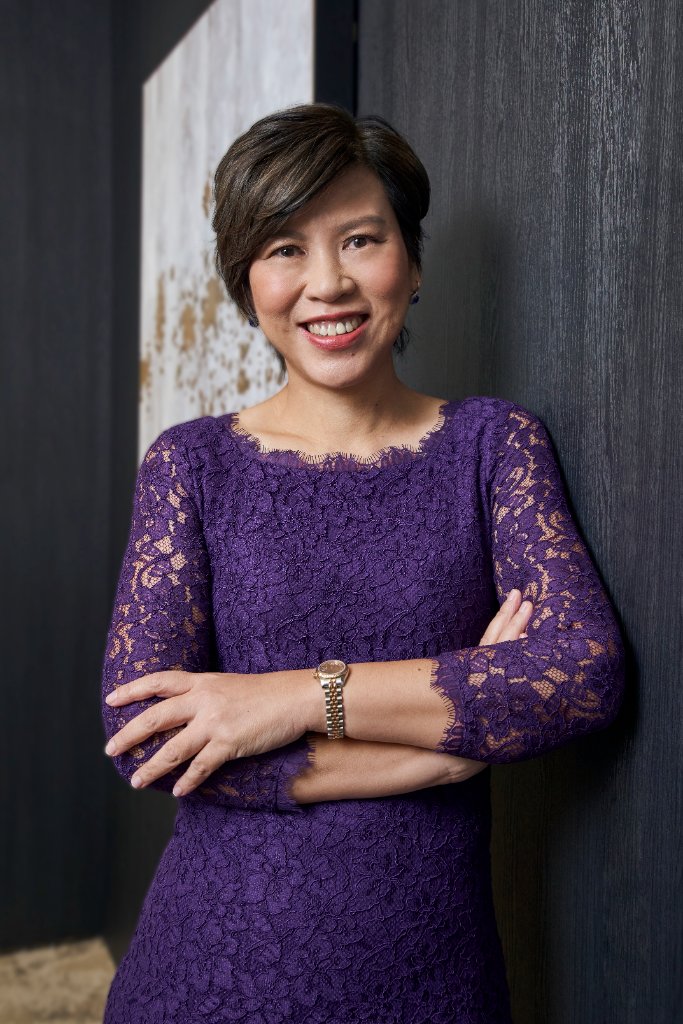
Adeline Tiah
Leadership & Team Coach | ICF PCC | Author of Reinvent 4.0