Why 'AI + Human' Is the Wrong Equation — And What Actually Determines Who Thrives
At a recent keynote I delivered on "Reinvent to Thrive in Uncertainty," I opened with a line that stopped the room:
"Humans with AI will replace humans without AI."
It got people nodding. Some looked relieved — they were already using AI tools. Some looked anxious — wondering if they were behind. A few looked quietly smug.
Then I said: "And that's only half the story — and possibly the less important half."
The Excel Parallel Nobody Is Talking About
Cast your mind back to the mid-1990s. A new tool was becoming ubiquitous in the workplace: Microsoft Excel. Then came email. Then PowerPoint. Then the internet itself.
In each case, there was a period of disruption. Early adopters had an edge. Those who resisted fell behind. And eventually — inevitably — everyone learned to use the tools. They became table stakes. Basic competencies. Prerequisites, not differentiators.
Nobody today lists "proficient in email" on their CV as a competitive advantage.
AI is on exactly the same trajectory — just moving exponentially faster.
Within a few years, using AI tools will be as unremarkable as knowing how to use a spreadsheet. The organisations that are currently celebrating because their teams have "adopted AI" are celebrating a milestone — but it is not the finish line. It isn't even the race.
The race is something else entirely.
Being a User Is Not the Same as Being a Value Creator
This is the distinction I want every leader — and every professional — to sit with.
Everyone in your organisation can learn to prompt ChatGPT, use Copilot, or run AI-generated reports. That is a skill. It is learnable, trainable, and frankly, increasingly automated itself.
What is not easily replicated is the human capacity to:
- Identify the right problem to solve in the first place
- Ask the question nobody else thought to ask
- Connect an insight from one domain to a challenge in another
- Make a judgment call in conditions of ambiguity and incomplete data
- Build the trust and relationships needed to implement change
- Inspire people to move toward something they can't yet fully see
These are not AI functions. These are distinctly, irreducibly human functions. And in a world where the routine, the predictable, and the procedural are increasingly automated — these functions become more valuable, not less.
The question is not: Are you using AI?
The question is: What are you doing with it that only you can do?
The Mindset Shift That Actually Matters
In my work coaching senior leaders across Asia, I've observed that the professionals who are genuinely thriving in this environment — not just surviving — have made a fundamental shift in how they think about their role.
They have moved:
- From following a job description → to creating value. They don't ask "what is my role?" They ask "what problems can I solve?" They see their position as a platform, not a prescription.
- From staying in their lane → to connecting dots across disciplines. The most valuable people I know are not the deepest specialists in a single field. They are the people who can take an insight from behavioural economics, combine it with a trend in organisational design, and apply it to a business challenge in a way nobody else thought to try.
- From executing tasks → to designing outcomes. They are thinking about the result they are trying to create — and working backwards to determine how AI (and every other tool available) can accelerate that journey.
This is what I mean when I encourage people to think like entrepreneurs — regardless of whether they work in a corporation, a government agency, or a social enterprise.
Entrepreneurs don't ask: "What's in my job description?"
They ask: "What problem am I solving? Who benefits? What's the fastest path to creating that value?"
In the age of AI, that mindset is not just an entrepreneurial advantage. It is a survival skill.
What AI Actually Amplifies — And What It Can't Touch
AI is genuinely extraordinary at:
- Processing and synthesising large volumes of information at speed
- Identifying patterns in data
- Generating first drafts, options, and scenarios
- Automating repetitive cognitive tasks
- Making certain categories of decision-making faster and more consistent
But here is what AI cannot do — at least not in any way that matters for leadership:
- It cannot build genuine trust. Trust is built through consistent behaviour over time, through demonstrated care for another person's wellbeing, through the credibility that comes from having skin in the game. No algorithm replicates this.
- It cannot exercise moral courage. The willingness to say the difficult thing, to challenge a powerful person, to stand behind an unpopular decision — these require a kind of human commitment that has no AI equivalent.
- It cannot navigate cultural and emotional complexity. In Asia especially, the nuances of face, hierarchy, relationship, and context that shape every significant business interaction require human judgment of a kind that remains beyond current AI.
- It cannot be accountable. When things go wrong — and in business, they always do eventually — someone has to own it. That someone is human.
This is not techno-pessimism. I am genuinely excited by what AI makes possible. But I think it's important for leaders to be clear-eyed about where the human edge actually lies — because that clarity shapes how you invest in your own development and how you develop your teams.
The Rise of the Multi-Disciplinary Thinker
If there is one type of professional who I believe will be disproportionately valuable in the next decade, it is the multi-disciplinary thinker.
Not the generalist — someone who knows a little about everything and not enough about anything. But the professional who has genuine depth in at least one domain, combined with genuine curiosity across many others, and the ability to synthesise and connect across fields in ways that create novel solutions.
History is full of these people. Da Vinci was one. So was Steve Jobs — famous for taking a calligraphy class and letting it shape the typography of the Macintosh. So is Elon Musk — whatever you think of him personally — who built SpaceX by importing manufacturing principles from the automotive industry, something the aerospace establishment had never considered.
The common thread: they saw problems through more than one lens. They weren't constrained by the conventions of a single discipline. They asked: "What if we applied what works over there to the problem we're facing here?"
AI, ironically, makes this kind of thinking more powerful — not less. Because when you can rapidly synthesise information across fields using AI tools, the bottleneck is no longer access to knowledge. It's the quality of the questions you ask and the connections you're able to make.
Human creativity and curiosity, amplified by AI capability, is a formidable combination. But the human part has to be genuinely present.
A Message for Leaders: The Right Question to Ask Your Teams
In boardrooms and leadership teams across Asia, I am increasingly hearing variations of the same question: "How are we using AI in our organisation?"
It's a reasonable question. But it's the wrong question to lead with.
The better questions are:
- What value are we creating for our customers and stakeholders that we couldn't create before?
- What problems are we now solving that we previously couldn't?
- Are we developing our people to be value creators — or just tool users?
- What uniquely human capabilities are we investing in, as AI handles more of the routine work?
These questions reframe AI from a technology initiative into a strategic and human one. And that reframe matters enormously — because it determines where you focus your energy, your investment, and your development effort.
Your Job Title Doesn't Define Your Impact. Your Value Creation Does.
Your job title is a label. It describes a function, a level, a scope of responsibility. But it does not describe your impact. It does not describe what you uniquely bring to the problems your organisation faces. It does not define the value you create — or could create, if you chose to lead differently.
In the age of AI, the professionals and leaders who will thrive are not those who use AI the most. They are those who use their distinctly human capabilities the most — their judgment, their creativity, their ability to build trust and navigate complexity — with AI as a powerful accelerant.
The question I'd invite every leader reading this to sit with is not: "Am I using AI?"
It's: "What value am I creating in my organisation that only I — with my specific experience, judgment, relationships, and perspective — can create?"
That answer is your real competitive advantage. Protect it. Develop it. Lead with it.
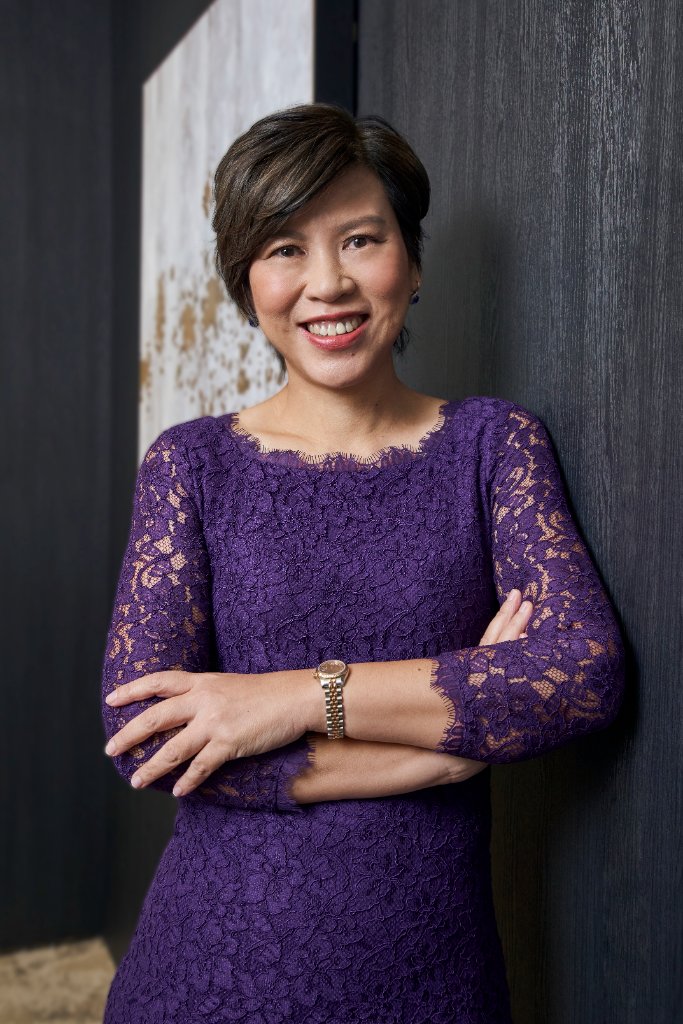
Adeline Tiah is an ICF PCC Certified Executive Coach based in Asia, with 28 years of corporate leadership experience across global MNCs. She specialises in leadership transformation, high-performing teams, and culture change — and is the author of Reinvent 4.0, a guide to leading with purpose in an age of disruption.
Keep exploring
More insights on AI & LeadershipRelated reading
- Is anyone still finding you on Google?
Not long ago, we typed a few words into Google and scrolled. Today many of us just ask ChatGPT, Gemini or Perplexity and get one answer back. If AI tools don't know you exist, they can't recommend you. Here's what SEO, AEO and GEO mean, and why the foundations still matter.
- Reinventing for Human Advantage
Everyone is reinventing for AI advantage right now. New tools, new workflows, new prompts. Almost nobody is reinventing for human advantage. But as AI takes over more of the technical work, what's left is what machines are worst at. Here's what that actually involves.
- AI Is a Leadership Opportunity. Here Are 5 Ways to Harness It.
Most leaders are treating AI as a threat to manage. A productivity tool to deploy. A cost to optimise. They are missing the bigger frame. AI is a leadership opportunity. The question is not what AI can do for your business. The question is what AI forces you to become as a leader.
Adeline Tiah
Leadership & Team Coach | ICF PCC | Author of Reinvent 4.0