The Identity Trap No One Talks About in Career Transitions

Here's the uncomfortable truth most corporate leaders won't admit:
Your title isn't just what you do. It's become who you are.
"What do you do?" is really asking "Who are you?" And for years, that business card was our mirror. Strip it away, and suddenly — who are you?
Most people never ask this question until they're forced to.
The Many Identities We Carry
Think about it. We carry many identities simultaneously — mother, wife, sister, daughter, friend. We show up differently in each role. We adapt. We flex. Work is only one part of our operating system.
But somewhere along the way, for many high-achieving leaders, work didn't just become a big part of identity. It became the whole identity.
Herminia Ibarra calls this "working identity" — the idea that who we are professionally isn't fixed. It's a working draft, always in progress. The problem? High-achievers often stop revising it. The CV becomes the self. The title becomes the answer to every existential question.
We don't have an identity crisis in transition. We ARE in one — whether we admit it or not.
The Framework: William Bridges' Three Phases
William Bridges had a framework for this that I keep coming back to.
Every real transition — not just a job change, but a genuine transition — starts with an Ending. And most people skip this part entirely. They update the LinkedIn, start networking furiously, and jump straight into "what's next" — without ever sitting with what they're leaving behind.
Then comes what Bridges calls the Neutral Zone — the messy middle. The in-between space where you've left what was, but haven't yet arrived at what will be. It feels uncomfortable. Unproductive. Like you should have this figured out by now.
Here's what I want you to hear: that discomfort isn't a sign you're failing. It's a sign you're actually doing the work.
Only when you've genuinely processed the ending does the New Beginning land — not just as a new role or title, but as a new version of you.
My Transition: The Power of Writing
When I left my corporate career, I felt this viscerally.
Writing Reinvent 4.0 was never just a book project. It was how I processed the letting go. Every chapter was me working through what I was leaving — the identity, the status, the certainty — and slowly articulating what I was becoming.
Being an author became a bridge between my past life and my new life as a professional coach. I didn't plan it that way. But I needed that bridge. Something that honoured where I came from, while pointing toward where I was going.
And I know I had truly transited when I stopped introducing myself as "ex-CMO of Meta" or "former CHRO of P&G" — and started showing up as who I am now. When I could simply say — this is who I am — and mean it fully.
The Ego Question
Then there's the ego. The elephant in every transition conversation that nobody wants to name.
Ego whispers: "You are your achievements. You are your track record. You are what you've built."
Transition asks a much harder question: "But who are you without all of that?"
This isn't a comfortable question. It's not supposed to be. But it is the most important question a leader in transition can sit with. Because the leaders who skip it — who move from one impressive title to the next without ever doing this inner work — often find themselves ten years later still defining themselves by a past that no longer exists.
Redefining success isn't weakness. It isn't giving up. It's the whole point.
Three Learning Points for Your Transition
1. Know WHO you are — beyond what you do
Before you figure out your next role, figure out your values. What do you stand for? What lights you up? What kind of leader — what kind of person — do you want to be in this next chapter? The clearer you are on this, the less likely you are to just replicate the old identity in a new context. Start there. Everything else follows.
2. Let go — and discover how liberating it really is
I know it sounds counterintuitive. We're wired to hold on. But letting go of a title, a status, a chapter — even one you loved — creates space. Space for curiosity. For reinvention. For a version of yourself you haven't met yet. When I finally released my grip on who I used to be, I didn't feel loss. I felt free. That freedom is available to you too — but only on the other side of the letting go.
3. Experiment. Get out there. Enlarge your world
Talk to people outside your industry. Say yes to conversations that feel slightly out of reach. Try things. Volunteer for a board. Mentor someone. Write. Speak. Travel. Identity in transition isn't found by thinking your way through it — it's found by doing. The more perspectives you expose yourself to, the more clearly you'll see what resonates with who you're becoming.
The Invitation
What would it look like to lead your next season from your values — rather than your titles?
What if the transition you're navigating isn't a career problem to be solved, but an identity invitation to be answered?
You don't need another strategy. You need to ask better questions.
Where are you in this journey? Are you in the ending, the messy middle, or the new beginning?
If you're navigating a career transition and want a thinking partner to help you make it with intention, I'd love to have that conversation. Book a complimentary strategy call here.
Adeline Tiah is an ICF PCC Certified Executive Coach based in Asia, with 28 years of corporate leadership experience across global MNCs. She specialises in leadership transformation, high-performing teams, and culture change — and is the author of Reinvent 4.0, a guide to leading with purpose in an age of disruption.
Keep exploring
More insights on ReinventionRelated reading
- “What Have You Been Up To?” Is the Worst Question We Ask Each Other.
Somewhere along the way, busy stopped being a schedule and became an identity. When I left corporate after 28 years, the first thing that disappeared wasn't the salary. It was the full calendar. Here are five questions to ask instead of “what have you been up to”.
- How I Built My Parachute Before I Jumped — And How You Can Too
Most senior leaders don't lack courage. They lack a parachute. After 28 years in corporate, here's what I did to land well — and what I've helped others do since.
- OKRs Were Designed for Companies. Here's How to Use Them to Reinvent Yourself.
The framework that helped Google and Intel scale their ambitions can do the same for you — if you start with purpose, not performance. A guide to personal OKRs for senior leaders navigating reinvention.
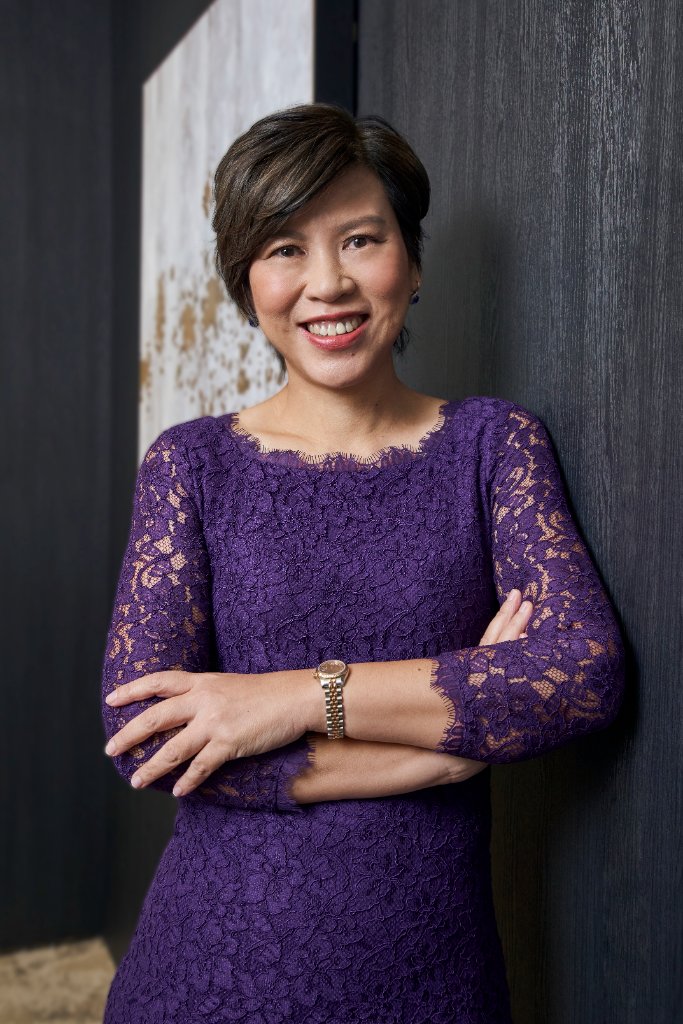
Adeline Tiah
Leadership & Team Coach | ICF PCC | Author of Reinvent 4.0